Inhaltsverzeichnis
A pipe fitting selection guide starts with the job the fitting must perform: change direction, create a branch, connect sections, change bore or close an opening. That function must then be translated into a specific geometry and connection arrangement. Ordering a fitting by its general name and nominal size leaves too many interfaces undefined, especially when the inquiry moves between engineering, procurement and an overseas supplier.
This pipe fitting selection guide helps buyers prepare a clear requirement record without assuming a particular supplier’s range. It focuses on metallic industrial piping and the information needed to discuss butt-weld, socket-weld and threaded connections. Material suitability, numerical ratings and final acceptance remain subject to the approved project design. Use the questions below to expose missing inputs before those uncertainties become fabrication changes.

Define the fitting function and the drawing reference
Begin with the piping arrangement or isometric and identify the exact connection location. Record the line number, fitting function, quantity and drawing revision. An elbow changes direction, a tee introduces a branch, a reducer changes the connected size and a cap closes an end. These descriptions establish the purpose, but each still needs dimensions and end details. For example, a tee requires identification of the run and branch; a reducing connection requires both end sizes.
Avoid converting a parts list into a purchase order until engineering has resolved ambiguous entries. Terms such as standard elbow or steel reducer may reflect local shorthand that a supplier interprets differently. Ask for an annotated drawing or a complete line-item description. This pipe fitting selection guide works best when every fitting can be traced to an actual interface in the system and every later revision has a clear owner.
Choose the connection-end family before comparing offers
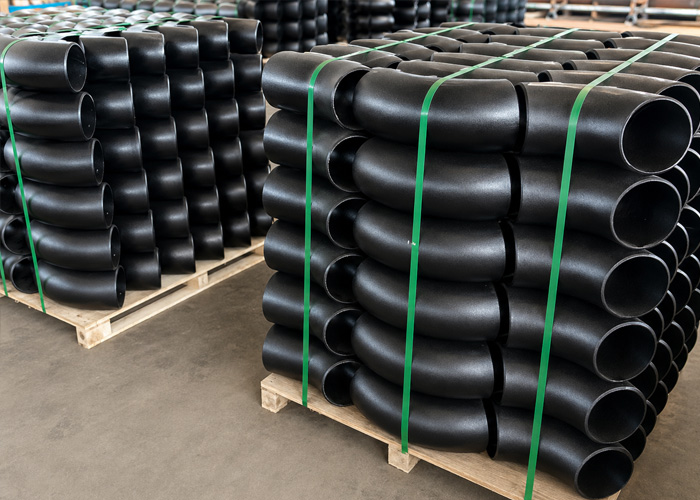
Butt-weld, socket-weld and threaded fittings connect to the pipe in different ways. They therefore require different fabrication inputs and cannot be compared solely by outside appearance. A butt-weld inquiry must address the pipe geometry and weld ends. A socket-weld inquiry needs the socket interface and approved fit-up detail. A threaded inquiry needs an identified thread form, size and mating component. The application must also permit the proposed connection method.
Treat any proposed change in connection family as a technical deviation. It may alter fabrication procedures, inspection, accessibility, maintenance or the system’s design assumptions. The buyer should ask who will approve the substitute and how the connected pipe or equipment will be affected. A supplier’s ability to deliver a fitting quickly does not establish that a different end connection is acceptable for the intended service.
| End family | Inputs needed for comparison | Unresolved assumption to avoid |
|---|---|---|
| Butt weld | Pipe size, wall basis, end preparation and applicable fitting requirements | Nominal size proves the weld ends will match |
| Socket weld | Socket geometry, pipe interface and approved installation detail | The fitting can be installed using any convenient insertion position |
| Threaded | Thread standard, size, mating component and service approval | Similar-looking threads are interchangeable |
| Flanged connection | Mating standard, drilling, facing, gasket and bolting requirements | Matching nominal size establishes a complete joint |
Record geometry for routing and fabrication
The dimensional description should explain how the fitting occupies space in the spool. For an elbow, identify the required angle and the relevant center-to-end or radius basis. For a tee, distinguish the run and branch dimensions. For a reducer, identify the large and small ends and specify whether the geometry is concentric or eccentric. The drawing must show the required orientation when eccentricity affects the system arrangement.
For replacements, survey the actual installation and compare it with the controlled drawing. Nearby welds, supports, insulation, valves and equipment can constrain the available envelope. A fitting that is individually compliant with the order may still fail to fit when the original requirement was incomplete. Include the site measurements and their reference points in the inquiry, and have the engineer decide which dimensions are mandatory acceptance features.
Separate nominal size from the wall and bore requirements
Nominal size is an identification system; it is not a complete statement of every measured dimension. Record the connected pipe outside diameter and wall designation or specified wall dimensions as required by the project. Where two ends connect to different pipe sizes or walls, specify both interfaces. Ask the supplier to identify the proposed end geometry and any transition detail that needs engineering review.
Do not assume that a familiar schedule label, by itself, settles every fitting thickness requirement. The applicable fitting standard, material specification, manufacturing design and ordered end dimensions may each have a role. A pipe fitting selection guide should prompt the buyer to request the correct technical confirmation rather than invent a pressure capability from a wall label or compare quotations that silently use different wall bases.

Use the applicable standard for the actual fitting family
A purchase description should identify the relevant product requirements and material requirements separately. For butt-weld fittings, ASME’s published B16.9 scope addresses factory-made wrought buttwelding fittings and includes dimensions, tolerances, ratings, testing and markings. Consult the official ASME B16.9 scope before applying that reference to an inquiry. The scope is not a substitute for the detailed edition specified by the project.
Avoid applying a familiar standard name to every connection in the order. A threaded fitting, a socket-weld fitting and a butt-weld fitting may require different product references. The governing piping design rules also remain separate from the component specification. Record the reference and edition on each line where the order contains several families, and ask for a clarification whenever a quotation uses a different basis.
Specify material against the process and external exposure
State the required material specification and grade instead of using steel or stainless as the complete requirement. Give the engineering team the process fluid, temperature range, cleaning conditions and external environment needed to assess suitability. The inside and outside of a fitting may face different deterioration mechanisms. Consider the connected materials as well, since compatibility decisions often extend beyond the fitting itself.
For purchasing, turn the approved material decision into evidence requirements. Identify the certificate scope, traceability method and any project-specific examination or material verification. Clarify how heat or lot identity will survive cutting, processing, marking and packing. A material description on a quotation is a proposal; the receiving team still needs a practical way to connect the delivered fitting to the accepted documentation.
Review fabrication and examination responsibilities
Identify who is responsible for manufacturing the fitting and who is responsible for incorporating it into the piping. These are related activities with different deliverables. A component supplier’s inspection record does not automatically cover field welds or the completed spool. The inquiry should define the ordered condition of the fitting, while the project fabrication documents should define welding, examination and assembly responsibilities after delivery.
Where the order calls for additional examination, specify the method, coverage, acceptance reference and reporting requirements. Clarify witness or hold points before manufacturing starts. Do not add an undefined request for full testing and expect every supplier to price the same work. The pipe fitting selection guide should help the buyer agree a test scope that can be inspected and documented, with open engineering decisions visible in the deviation register.
Build a line-item RFQ that suppliers can price consistently
Use one row per distinct fitting description. Include the function or type, quantity, connected sizes, geometry, end family, product standard, material grade, wall or end requirements and drawing revision. Add the required certificates, examination scope, protective treatment and packing requirements. Identify whether special marking, individual identification or package separation is necessary for the receiving workflow.
A useful RFQ example is a reducer line with explicitly labelled large and small ends, a stated concentric or eccentric arrangement, the approved wall and end details, and a drawing that controls length and orientation. This is an illustration of the required information structure, not a catalogue claim or a recommended design. Ask each supplier to list deviations against that same line rather than replacing it with a shorter commercial description.
Compare technical bids before considering landed cost
Create columns for compliance, clarification and deviation. Compare the proposed material, product basis, geometry, wall requirements, documents and inspection scope before comparing unit prices. If a supplier offers an alternative, keep the original requirement and the proposed change side by side. Record the engineering disposition and any effect on connected parts or fabrication work. Unapproved alternatives should not be treated as technically equivalent offers.
Then compare the commercial scope: packing, freight basis, delivery destination, document timing and any separately priced inspection. A lower unit price can move work or risk to another party when the offered scope is narrower. The pipe fitting selection guide should support a purchase decision that accounts for those differences, while keeping estimated delivery dates and supplier capabilities as confirmed offer details rather than general website assumptions.
Prepare the incoming inspection and release record
Define the receiving checks while the order is being agreed. Inspect quantity and package identity, visible condition, markings, documentation references and the critical connection geometry. Preserve identification when packages are opened or parts are moved to fabrication. Where examination equipment or specialist review is needed, plan it before arrival. Keep unidentified or discrepant items separate from released stock until their disposition is recorded.
Close the purchase with an auditable release package that links the accepted order, drawings, certificates, inspection results and any approved deviations. Transfer the relevant information to the fabricator, including end requirements and material identity. A pipe fitting selection guide is successful when the delivered part can be identified, checked and used against a defined requirement without asking the site team to guess what the original inquiry meant.
Für die aufgeführte Produktpalette, Bewertung Rohrverbindungsstücke und Zeichenbasierte Anpassungsunterstützung. Geben Sie die tatsächlichen Schnittstellenanforderungen zur Bestätigung im Angebot an.
Prepare your inquiry with this pipe fitting selection guide, then use the form below to send the fitting list, connected-pipe sizes and walls, material requirements, end details and drawings. Include the quantity, documentation scope and delivery destination so that questions can be resolved against a clear purchase requirement.
Häufig gestellte Fragen
What does a pipe fitting selection guide need first?
Start with the fitting function and the actual connection location. Then define geometry, connected sizes, end type, material and the approved project requirements.
Can butt-weld and threaded fittings be quoted as equivalents?
Only after the responsible engineering team approves the change. They use different connection methods and may alter fabrication, inspection and maintenance requirements.
What information is needed for a reducer inquiry?
Identify both end sizes, the concentric or eccentric arrangement, required length and orientation, material and wall or end requirements. Use a controlled drawing where needed.
Does nominal size establish fitting pressure capability?
No. Pressure capability depends on the applicable design and product basis, material, geometry, temperature and other project requirements.
Should every fitting use the same product standard?
No. Select the appropriate reference for the fitting and connection family. Keep component, material and system-design requirements distinct in the purchase description.