Table des matières
This review of plate flange RFQ checklist helps industrial buyers prepare a quotation request that identifies every physical interface and the full document scope. For a plate flange, the defining interface is a flat plate body, a pipe opening, bolt drilling and the specified sealing face. The review should establish whether the ordered plate geometry, material and rating basis describe the intended joint. A familiar name or a convenient catalogue image cannot settle that decision without the connected-part information and the required evidence.
This guide develops an RFQ line with a controlled drawing and an explicit list of supplier exclusions. It addresses the product and the purchase decision separately, so a proposed alternative can be evaluated before fabrication or shipment. Numerical acceptance values must come from the project-approved drawings and applicable requirements. The worked purchasing situation below is illustrative and does not describe a reported customer project.
Understand the plate flange interface
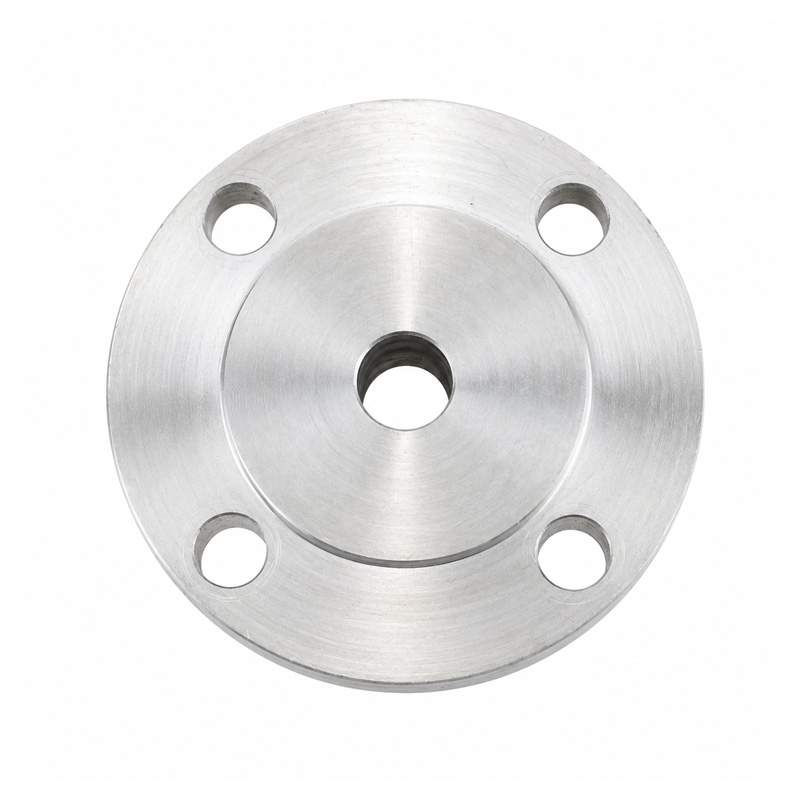
The physical review begins with a flat plate body, a pipe opening, bolt drilling and the specified sealing face. A plate description does not establish equivalence to a forged flange. Confirm the permitted material and manufacturing route against the actual standard and design. The distinction to retain in the technical discussion is plate construction versus a forged hubbed connection. This affects the questions asked of the supplier and the information the fabricator needs. Keep the component description connected to the actual pipe or equipment arrangement rather than evaluate the part as an isolated object.
Confirm the exact configuration against the connected parts and the approved drawing; the general product name is not the final purchase specification. See the plate flange product information pour le contexte du produit répertorié, et confirmez la configuration ordonnée exacte dans la citation et le dessin acceptés La disponibilité du catalogue et une spécification approuvée par le projet sont des éléments de preuve distincts.
Define the decision for plate flange RFQ checklist
Write the purchase description in the same order for each supplier: product configuration, connected sizes, end details, material, applicable product basis, quantity and evidence requirements. Identify the drawing revision beside the order line. A response that says standard supply should be expanded until the buyer can identify the actual proposed configuration. Keep unanswered questions separate from agreed requirements, and require deviations to be stated against the original line.
For this component, organise the review around four concrete inputs: plate material specification and manufacturing basis; bore against the connected pipe outside diameter; plate thickness and the controlling rating basis; bolt circle, hole count and facing compatibility. Their importance is specific to the interface described above. Ask the responsible owner to confirm each input or identify the document that controls it. If a requirement is absent, state what remains unknown and how it affects prepare a quotation request that identifies every physical interface and the full document scope; do not allow an empty field to become an assumed approval.
A decision worksheet for plate flange RFQ checklist
The worksheet applies this review to plate flange. Use the project requirements for acceptance values; the entries identify what must be resolved rather than prescribe dimensional or pressure limits.
| Élément d'examen | Preuve ou décision requise | Propriétaire à confirmer |
|---|---|---|
| Plate material specification and manufacturing basis | Which interface values are confirmed by the buyer? | Ingénierie et fournisseur |
| Bore against the connected pipe outside diameter | Which proposed details require supplier confirmation? | Propriétaire et inspecteur de dessin |
| Plate thickness and the controlling rating basis | What must be included in the quoted document and inspection scope? | Examinateur de matériel et fournisseur |
| Bolt circle, hole count and facing compatibility | Which interface values are confirmed by the buyer? | Fabricant et ingénierie |
| Objectif technique | An RFQ line with a controlled drawing and an explicit list of supplier exclusions | Acheteur et ingénierie |
| Arrangement alternatif | Plate construction versus a forged hubbed connection | Propriétaire technique agréé |
Work through a shutdown replacement
Consider an illustrative situation involving plate flange: the available parts list uses a trade name while the installed connection has not been fully surveyed. The immediate response is to collect the installed identity, measure the critical interfaces and compare the survey with the controlled drawing before requesting a substitute. In this case, start with plate material specification and manufacturing basis and check its relationship to bore against the connected pipe outside diameter. That pair of inputs establishes a concrete review point instead of a general request for a better-quality product.
The useful outcome is an accepted replacement basis with site checks separated from supplier manufacturing requirements. For RFQ checklist, the record should also produce an RFQ line with a controlled drawing and an explicit list of supplier exclusions. Identify the owner of the remaining technical decision and the document that will capture it. If an alternative affects plate thickness and the controlling rating basis, have the engineering team review that interface before commercial acceptance. The scenario illustrates a decision process; it is not a claim that a particular failure or project result has occurred.

Questions that resolve plate flange RFQ checklist
Before comparing price, reconcile the supplier’s description with the inquiry one field at a time. Confirm whether protection, marking, certificates, inspection attendance and delivery documents are included. A quoted lead time needs a defined start point, such as technical approval or order confirmation, so it can be compared meaningfully. Release the order only after the technical assumptions have named owners and accepted dispositions.
Three questions close this review: Which interface values are confirmed by the buyer? Which proposed details require supplier confirmation? What must be included in the quoted document and inspection scope? Relate the answers to plate material specification and manufacturing basis and bolt circle, hole count and facing compatibility, and retain the accepted references with the component identity.
Specify both the nominal designation and the end detail
A nominal designation identifies a size family but does not describe the entire end connection. Record the actual interface information required by the design: the relevant outside diameter, wall basis, thread form, socket geometry or weld preparation. If the two ends differ, describe them independently. Avoid filling an unanswered field by copying the value from the other end. Ask the supplier to identify any proposed transition detail and obtain engineering approval before manufacture. That clarification is easier to manage during an inquiry than after a spool has reached the fit-up stage.
Keep sampling limitations visible in the report
If the agreed inspection plan uses sampling, identify the defined lot, selected items and sampling basis. The report should state what was actually examined rather than imply every delivered component received the same check. Record item identities where results or observations need to be traced. When a discrepancy appears, follow the agreed process for additional examination or lot disposition. The release authority needs to understand the scope of the evidence, including any limits, to decide whether the shipment meets the accepted requirements.
Define the next stage after mechanical completion
Completion of component manufacture or mechanical assembly does not automatically release the installed system for operation. Identify the inspection, testing and commissioning activities required by the project and the person responsible for release. Retain open findings with their authorised dispositions. If the system behaves unexpectedly, follow the site’s isolation and investigation process before corrective work. A clear handover distinguishes what has been completed from the remaining prerequisites and prevents one team from assuming another has accepted the whole system.
Spécifiez l’examen sans étiquette de test ouverte
Lorsqu'un examen supplémentaire est requis, définir la méthode, la couverture, la référence d'acceptation et la portée de déclaration Identifier le témoin ou les points de retenue requis avant l'étape de fabrication pertinente L'expression essai complet ne fournit pas une base commune pour la tarification ou la distinction entre les essais sur les matériaux, l'examen des composants et les travaux effectués après l'installation Un rapport pour une activité n'établit pas l'achèvement d'une autre Gardez toute différence entre la portée proposée par le fournisseur et la commande visible jusqu'à ce que le propriétaire technique approprié l'ait disposé.
Demandez des preuves derrière les demandes d’approbation spécifiques au projet
Une déclaration de site Web ou un logo n'établit pas qu'un composant livré particulier satisfait aux exigences de certification ou d'approbation du projet Identifier l'exigence exacte et demander les preuves qui s'appliquent à la fourniture commandée Vérifier sa portée, son identité et sa validité par le biais du processus d'examen approprié Tenir les allégations relatives aux capacités de l'entreprise séparées des dossiers de conformité des matériaux et des produits Cela permet à la passation de marchés d'éviter de présenter une déclaration de marketing générale comme preuve qu'une commande individuelle a satisfait à chaque obligation d'acceptation technique.
Separate component supply from site work control
The supply package can identify the component and its technical requirements, but it cannot establish that an existing system is ready to be opened or modified. The responsible site team must verify isolation, depressurisation, permits and the other work-control prerequisites for the actual service. Keep those duties in the approved site process. The purchasing and fabrication records should provide the information that process needs without implying that a delivered part or a supplier’s certificate authorises work on operating equipment.
Prepare the plate flange RFQ checklist handover
Parcourir les listés Assemblage de brides ou envoyez des dessins pour revue de personnalisation. Include the accepted drawing revision and an RFQ line with a controlled drawing and an explicit list of supplier exclusions. The quotation should identify the exact supplied configuration and remaining engineering decisions.
Vérifiez le référence des standards de l'éditeur avec l'ingénieur de projet avant de sélectionner la portée et l'édition applicables Une page de référence n'établit pas de manière indépendante l'adéquation ou la certification du composant commandé.
Use the form below to send your plate flange inquiry with quantity, delivery destination, drawing revision and the information for plate flange RFQ checklist. Include plate material specification and manufacturing basis; bore against the connected pipe outside diameter; plate thickness and the controlling rating basis; bolt circle, hole count and facing compatibility and identify any requirements still awaiting engineering confirmation. This allows the proposed product and document scope to be reviewed against the same purchasing basis.
Foire aux questions
What is the first step in plate flange RFQ checklist?
Start with plate material specification and manufacturing basis and the actual mating arrangement. Define the review objective: prepare a quotation request that identifies every physical interface and the full document scope. Keep missing information visible until its responsible owner confirms it.
What evidence should the plate flange inquiry request?
Request the accepted drawing and the records needed for an RFQ line with a controlled drawing and an explicit list of supplier exclusions. Link the evidence to the ordered material and item identity, and define any inspection or witness scope before manufacture.
Why does bore against the connected pipe outside diameter need a separate check?
It controls a specific part of the interface: a flat plate body, a pipe opening, bolt drilling and the specified sealing face. A familiar product name cannot establish every connected requirement. Record the applicable drawing or specification and obtain approval for proposed differences.
Can plate construction versus a forged hubbed connection be treated as equivalent?
Only after the relevant technical differences are reviewed and accepted. A plate description does not establish equivalence to a forged flange. Confirm the permitted material and manufacturing route against the actual standard and design. Keep any accepted alternative in the purchase and inspection baseline.
When is the RFQ checklist review ready for handover?
When the defined inputs, evidence and approvals support whether the ordered plate geometry, material and rating basis describe the intended joint. Retain open conditions explicitly and transfer an RFQ line with a controlled drawing and an explicit list of supplier exclusions to the team responsible for the next stage.